

In 1996, Edith wrote the application to the Leverhulme Trust which funded the establishment and first three years’ work of the Archive of Performances of Greek and Roman Drama at Oxford University, where she was then a tenured lecturer. She cofounded the Archive with Professor Oliver Taplin and remains its Consultant Director. She also wrote the two subsequent AHRC grant applications that sustained its activities and research for another ten years. The project has produced numerous publications and is an international hub for bringing together scholars and practitioners of theatre.
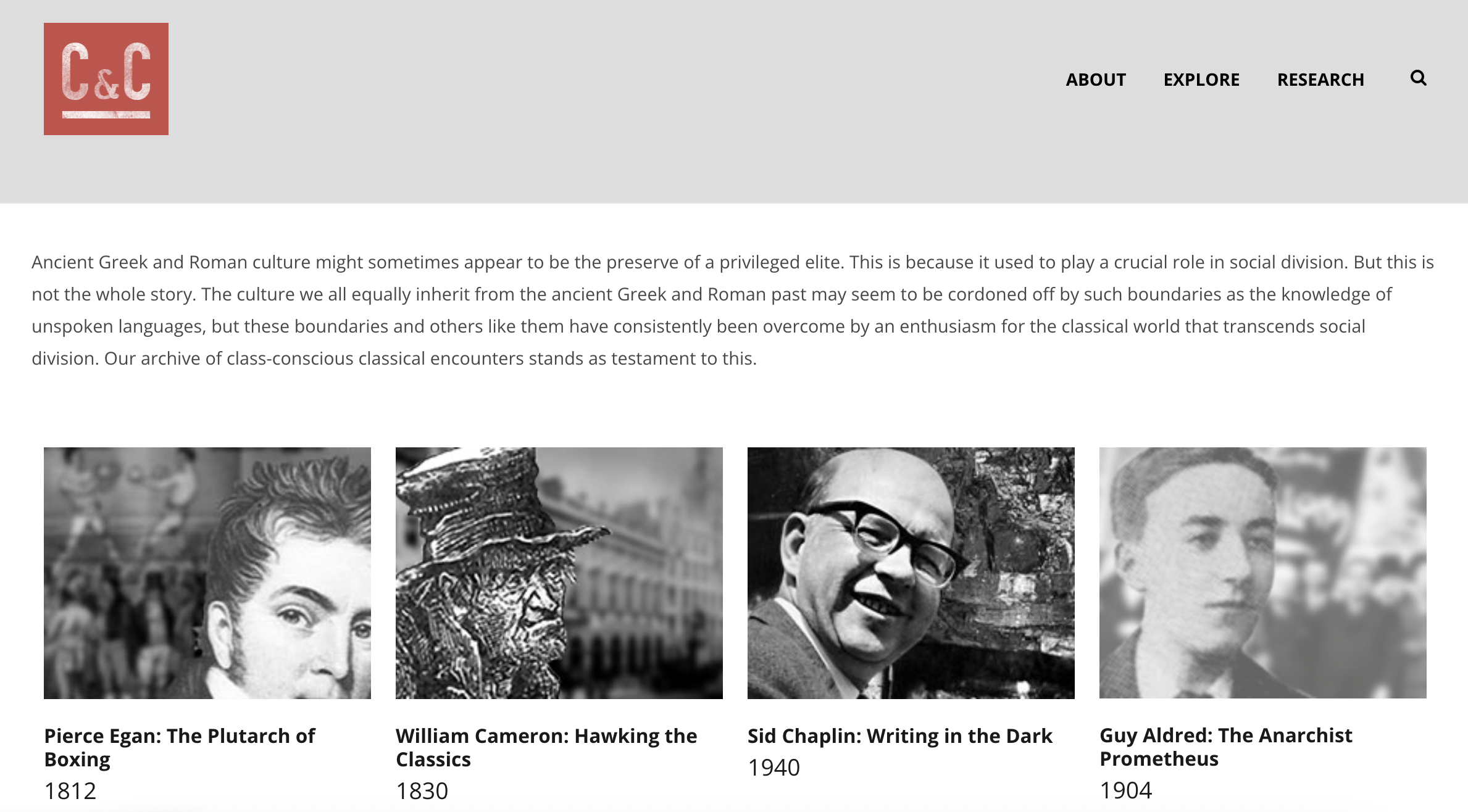
The full title of this AHRC-funded research project, conducted with Dr Henry Stead, was Classics and Class in Britain 1789-1939. Our primary aim was to present and amplify the many lost voices of British working-class men and women who engaged with ancient Greek and Roman culture throughout the period. We wanted to show the richness and diversity of the responses to ancient Greece and Rome among those who are often thought to have been excluded from it. Our modern-day perception of the historical relationship between Classics and the divisions between citizens on the criterion of social class has long been distorted because the crucial voices — those of the working class — have not been heard. The project produced numerous publications.
This research project, funded by an ERC/UKRI Frontier Research Grant 2023-8, assesses Aristotle’s innovative and sometimes experimental styles of writing across his entire oeuvre, assessing his relationship with previous Greek literature, his imagery, use of rhetorical figures, vocabulary, especially in relation to emotion, his influence on later Peripatetic writing and the observations made about his styles in ancient commentaries.
The research team consists of Edith as Principal Investigator, Professor Phil Horky, Dr Alessandro Vatri and Dr Rosie Wyles. Forthcoming publications include a monograph by Edith on Aristotle’s imagery and analogies, a project monograph on Aristotle’s zoology and an edited volume, Philomythia: Aristotle’s Use of Previous Literatures.

This research project, based in the Centre for Classical Reception at the University of Durham and funded by the Leverhulme Trust, asks how, where and why Aristotle has made cultural appearances in England, Scotland, Ireland and Wales since the Restoration (1660). It focusses on the three areas of ethics, law and politics, rhetoric, and natural science. This ancient Greek intellectual titan’s authority has been omnipresent and vigorously contested. He has been both used to reinforce established authority and adopted by radicals and progressives.
The team consists of Edith as Principal Investigator, Professor Arlene Holmes-Henderson and Dr Rory McInnes-Gibbons, who replaced Dr Peter Swallow MP when he was elected to Parliament in 2024.
Forthcoming publications include Aristotle beyond the Academy in Britain and Ireland 1660-1922 (Routledge Taylor Francis) and Summoning Aristotle: Explorations in his Public Reception (Liverpool University Press).
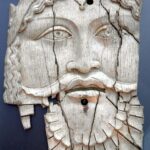
Unmasking Dionysus: Ancient Performance Culture’s Interfaces with the Environment
Edith is planning a major research project to investigate the relationship between ancient performance culture and the natural world. Henry Gee, senior Biology editor of Nature, calculates that if we do not change our ways, we have only five centuries before the planet will undergo the next Great Extinction and humans will disappear; even if we alter attitudes, the longest we have before we vanish is a very few millennia. Classics’ priceless documents of the mindset of the early Anthropocene can expose the contradictions underlying the environmental crisis we have created. Ancient performance culture can be read to expose how humans view their environments in ways informed by representations of nature, especially in canonical texts that have been widely translated, adapted, visualized, enacted, and included on the curriculum. How the ancients depicted relationships between people and the physical world has fundamentally affected how we imagine those relationships, too.
On April 22nd-23rd Edith is holding a pilot international conference to explore methodological approaches to these issues, which she will convene with her PhD student Emma Bentley.
The full programme can be found here. If you would like to attend either in person or virtually, please contact emma.bentley@durham.ac.uk by April 2nd.
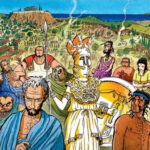
Aristophanic Comedy in its Contexts: Daylight Revelry
Edith has nearly completed a major monograph on Aristophanes’ comedies, which explores how excavating the precise temporal and topographical locations of his plays can illuminate their imaginative brilliance, humour, ideological drift and transhistorical stamina.