

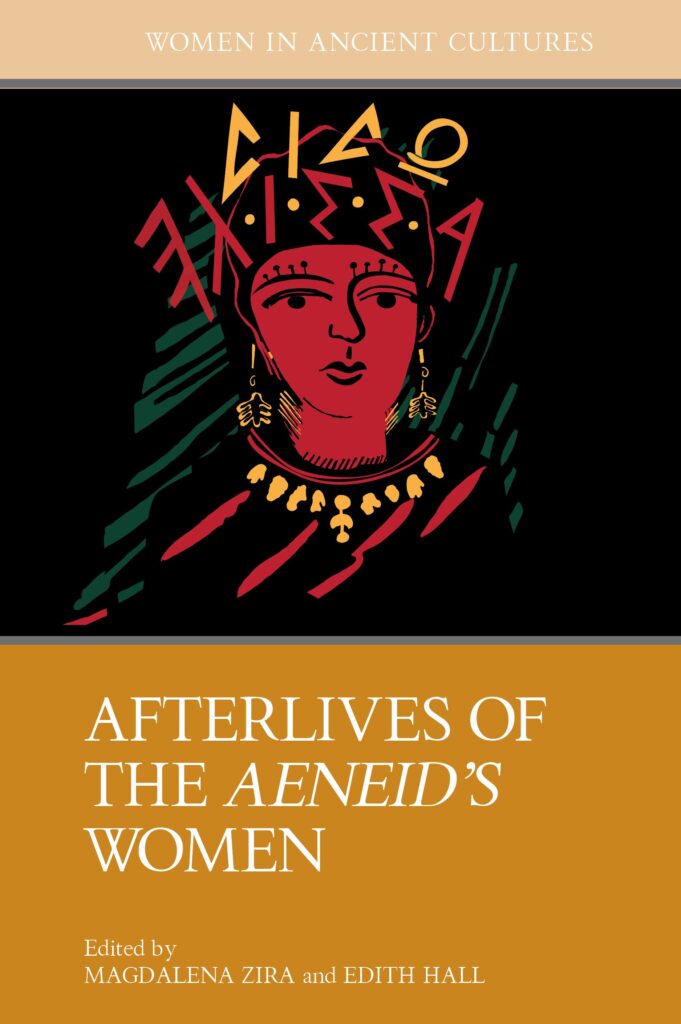
Afterlives of the Aeneid’s Women
(Liverpool University Press 2026)
This richly illustrated collection of essays, accompanied by a substantial introduction, investigates the international reception of the women (not goddesses) of the Aeneid from medieval times to the present.
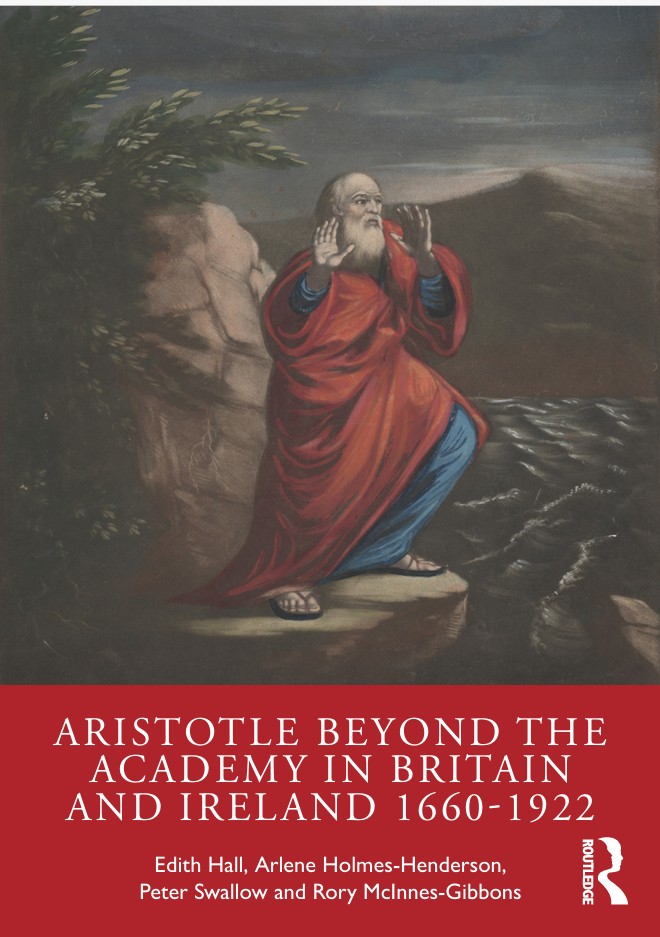
Aristotle beyond the Academy in Britain and Ireland 1660-1922
(Routledge Taylor Francis 2026)
This open-access book explores the questions of when, where, how and why Aristotle has appeared in England, Scotland, Ireland and Wales since the Restoration in 1660, through to Irish Independence in 1922. The primary focus is on ethics and politics, natural science, and rhetoric and the arts.
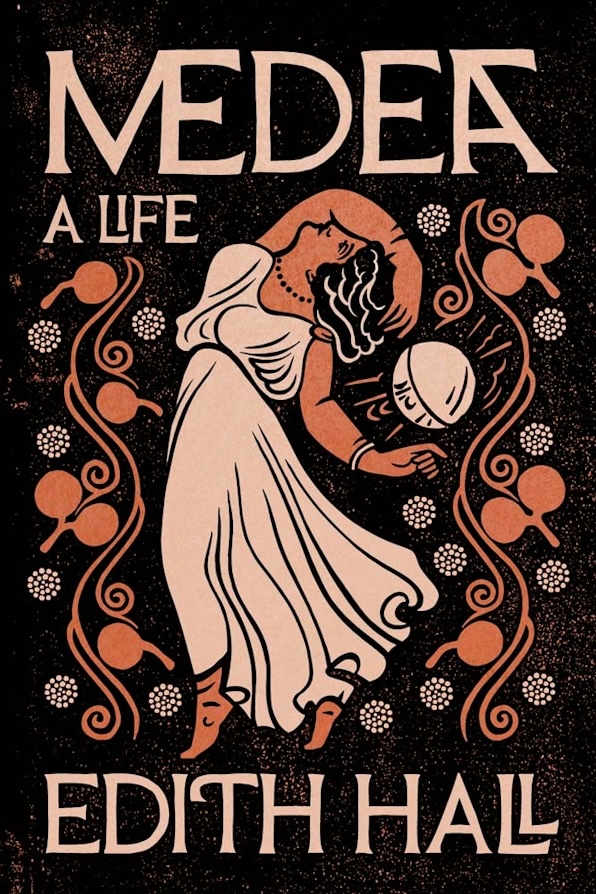
(Yale University Press 2026)
This biography of Medea draws on all the available ancient evidence to narrate her adventures from her Black Sea childhood and her murderous career on the Argo, in Thessaly and in Corinth to her departure in disgrace from Athens.

Classical Encounters in England’s North-East
(Routledge Taylor Francis 2026)
This collection of essays, three of which are by Edith, is co-edited with her Durham colleagues Dr Rory McInnes-Gibbons and Professor Edmund Thomas. It explores the ways in which the ancient world has informed the lives of people in the North-East of England and the ways in which it has been represented.

Time, Tense and Genre in Ancient Greek Literature
(Oxford University Press 2025)
A collection of essays co-edited with Edith’s former PhD student Dr Connie Bloomfield-Gadelha, including three by Edith, on the relationships between the treatment of time, literary genre and verbal tenses in Ancient Greek Literature.

Classical Civilisation and Ancient History in British Secondary Education
(Liverpool University Press 2025)
Co-authored with Edith’s Durham colleague Professor Arlene Holmes-Henderson, this book, which is free to read online, explores the history and content of secondary qualifications at GCSE and A Level in Classical Civilisation and Ancient History

Epic of the Earth: Reading Homer’s Iliad in the Fight for a Dying World
(Yale University Press 2025)
This monograph explores the conflicted relationship between humans and their natural environment in the great war epic, with a special focus on deforestation, the erasure of labour and the glorification of over-consumption.

Trees in Ancient Greek and Roman Poetry: An Ecocritical Approach to Classics
(Taylor and Francis 2025)
This collection of essays, co-edited with Professor Alison Sharrock, two of which are by Edith, explores the presentation of trees, timber and deforestation in classical epic literature from Homer to late antiquity

A Very Short Introduction to Sophocles
(Oxford University Press 2025)
This book provides an accessible introduction to Sophocles’ life, work, dramatic style, philosophical, political and theological themes.
Aristotle’s Rhetoric and Its Audiences
(Johns Hopkins University Press 2025)
Edith edited this Special Issue of the Journal Rhetorica, which contains essays by her and Durham colleagues on Aristotle’s influential treatise in antiquity and its receptions from the 17th to the 21st century,

(Liverpool University Press 2024)
This edition of Aeschylus’ masterpiece includes a new text, translation, extended introduction and commentary. It is one of the series published under the imprint of Aris & Phillips.

Facing Down the Furies: Suicide, the Ancient Greeks, and Me
(Yale University Press 2024)
Part memoir, part philosophical and literary investigation, this prizewinning book uses Greek tragedy and philosophy to explore the damage caused to families, including Edith’s own, by suicide.

Tony Harrison: Poet of Radical Classicism
(Bloomsbury 2021)
This monograph discusses the extraordinary adaptations, translations and poetic uses of ancient Greek and Roman literature and art in the poetry, plays and films of Edith’s friend, the late, great poet Tony Harrison.

A People’s History of Classics: Class and Greco-Roman Antiquity in Britain and Ireland 1689 to 1939
(Routledge Taylor Francis 2020)
This prizewinning book, co-authored with Dr Henry Stead, explores the influence of the classical past on the lives of working-class people, whose voices have been almost completely excluded from previous histories of classical scholarship and pedagogy, in Britain and Ireland from the late 17th to the early 20th century. To download the book click here.

Aristophanic Humour: Theory and Practice
(Bloomsbury 2020)
The essays collected in this volume, including two by Edith, were co-edited with Dr Peter Swallow MP, a former PhD student of hers. This volume sets out to discuss a crucial question for ancient comedy – what makes Aristophanes funny? How do his jokes, absurd scenarios and physical play actually work?

(Institute of Classical Studies 2020)
The essays in this collection, co-edited with Dr Alexia Petsalis-Diomidis, explore the powerful impact of ancient Greek vases and vase-painting on art and society between the 18th and 21st centuries. Edith’s contribution is an essay entitled ‘How much did pottery workers know about classical art and civilisation?’
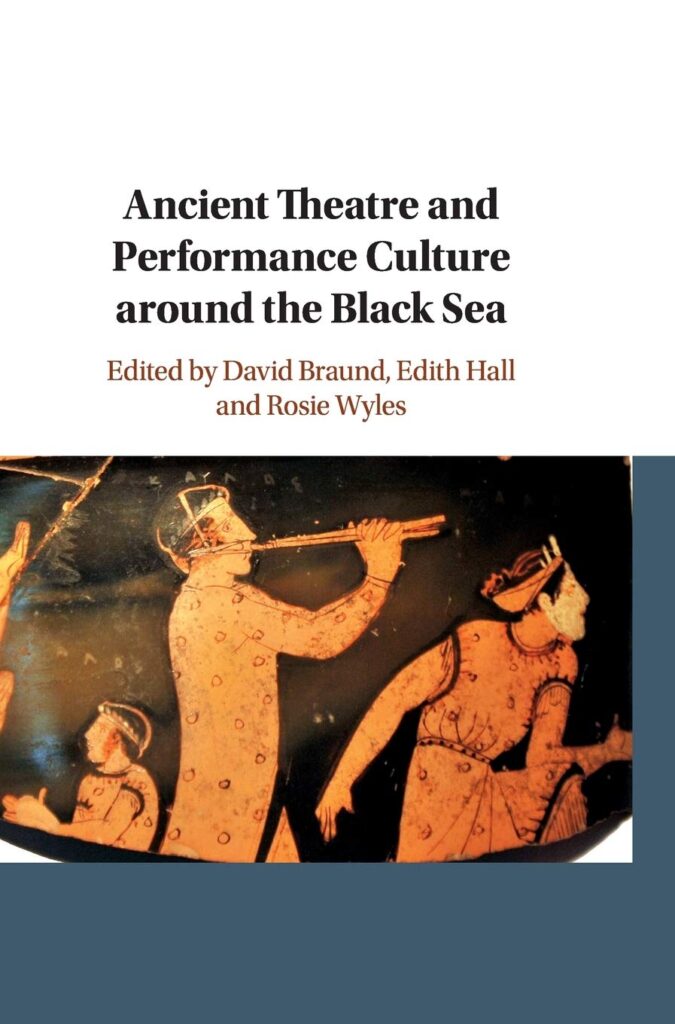
Ancient Theatre and Performance Culture around the Black Sea
(Cambridge University Press 2019)
This collection of essays, co-edited with Professor David Braund and Edith’s former PhD student and now Durham colleague Dr Rosie Wyles, demonstrates the vitality and stamina of theatrical and other performances in the Greek colonies which lined the coast of the Black Sea. Three chapters are by Edith.

Aristotle’s Way: How Ancient Wisdom can Change Your Life
(Penguin/Random House 2018).
This accessible account of Aristotle’s ethics and rhetoric applies to modern life the ancient philosopher’s model of maximising happiness by striving to be the best version of yourself and fulfilling your human and individual potential. This book has been translated into numerous world languages.

(OUP for the British Academy, 2018)
Edith edited and contributed two chapters to this volume celebrating the life’s work of the poet Tony Harrison. Contributors included Lee Hall, Blake Morrison and Simon Armitage.
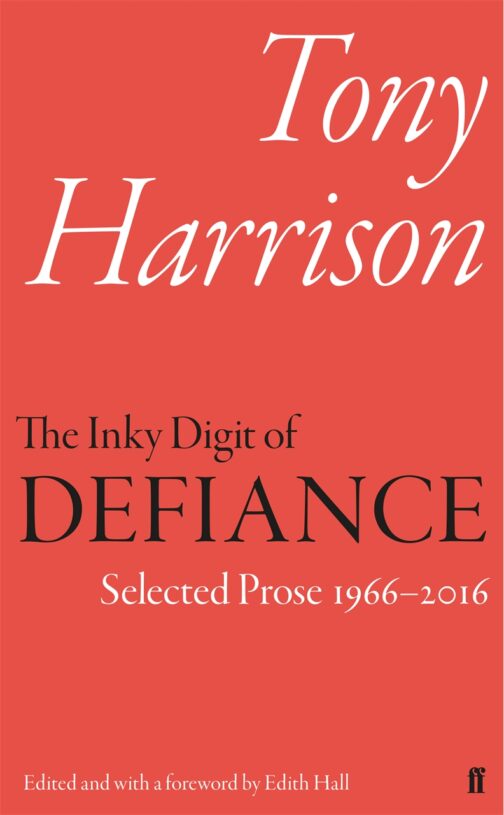
The Inky Digit of Defiance: Tony Harrison: Selected Prose
(Faber 2017)
Edith edited and introduced this selection of prose essays by the poet Tony Harrison, covering his worldwide travels, his influences, his views on metre, drama and film poetry, as well as more intimate insights into his friendships and close relationships.

(Oxford University Press 2016)
This is the first account of the foremothers of women in classical scholarship, opening up an exciting new direction of study. The essays range from the Renaissance to the 20th century. Edith contributed two chapters this volume, co-edited with her colleague and former PhD student Dr Rosie Wyles. This book can be read online here.

Ancient Greek Myth in World Fiction since 1989
(Bloomsbury 2016)
This collection of essays, co-edited with Edith’s former PhD student Dr Justine McConnell, now Reader in Comparative Literature at King’s College London, explores the worldwide spread of fiction retelling or adapting ancient Greek mythology. Edith’s own contribution is her essay ‘Narcissus & the Furies: Myth and Docufiction in Jonathan Littell’s The Kindly Ones’. This book can be read online here.

Greek and Roman Classics in the British Struggle for Social Reform
(Bloomsbury 2016)
This collection of essays, co-edited with Dr Henry Stead, demonstrates the importance of classical ideas, education and self-education in the personal development and activities of British social reformers in the 19th and first six decades of the 20th century. The prominent reformers, revolutionaries, feminists and educationalists of this era, far from regarding education in Latin and Greek as the preserve of the upper classes and inherently reactionary, were consistently inspired by the Mediterranean Classics. This book can be read online here.

Introducing the Ancient Greeks: From Bronze Age Seafarers to Navigators of the Western Mind
(Norton/Bodley Head 2014)
This book, also published under the title The Ancient Greeks: Ten Ways They Shaped the Modern World, offers an overview of Greek history and culture from Mycenaean times to the fourth century CE, arguing that the Greeks’ achievements resulted from their seafaring nature and incessant interaction with other ethnic groups. It has been translated into many modern languages.

Adventures with Iphigenia in Tauris: A Cultural History of Euripides’ Black Sea Tragedy
(Oxford University Press 2012)
This award-winning monograph traces the reception of Euripides’ once-famous play from its première in democratic Athens and impact on Roman audiences to its 21st-century presences in theatres and other media, including adaptations by Gluck, Goethe, Lesya Ukrainka and Pina Bausch. It can be read online here.

Ancient Slavery & Abolition: From Hobbes to Hollywood
(Oxford University Press 2011)
The essays in this collection, three of which Edith contributed, study the role played by ancient Greek and Roman sources and voices in the struggle to abolish transatlantic slavery and in representations of that struggle from the 17th to the 20th century. Co-edited with Professor Richard Alston and Edith’s former PhD student Dr Justine McConnell, this book can be read online here.

Greek Tragedy: Suffering under the Sun
(Oxford University Press 2010)
This monograph argues that tragedy is a serious and aesthetically heightened enquiry into the causes, nature and consequences of suffering. It offers individual studies of every surviving Greek tragedy and discussions of recurring themes, including gender conflict, war and exile. It can be read online here.

(Duckworth 2010)
The essays collected in this volume, co-edited with Professor Richard Alston and Edith’s former PhD student Dr Laura Proffitt, analyse diverse aspects of the representation of enslaved people and slavery in ancient culture. Edith’s contribution is entitle ‘Playing Ball with Zeus: Reading Ancient Slavery via Dreams’. This book can be read online here.

India, Greece & Rome 1757-2007
(Institute of Classical Studies 2010)
The essays in this volume, co-edited with Professor Phiroze Vasunia, explore the presence of ancient Greek and Roman material in the interactions between the people of the Indian subcontinent and British colonial and imperial agents. Edith’s chapter are ‘British Refraction of the 1857 “Mutiny” through the Prism of Greece and Rome’ and ‘Mughal Princes or Greek philosopher-kings? Neoclassical and Indian Architectural Styles in British Mansions built by East Indiamen’.

Theorising Performance: Greek Drama, Cultural History & Critical Practice
(Duckworth 2010)
The essays in this volume address a variety of theoretical perspective on the reception of ancient drama in performance. It is co-edited with Prof. Stephe Harrop and can be read online here.

Sophocles and the Greek Tragic Tradition
(Cambridge University Press 2009)
Coordinated as a tribute to Professor Pat Easterling, and coedited with Professor Simon Goldhill, the essays in this volume explore diverse aspects of Sophocles’ tragedies and their role in shaping the subsequent tragic tradition. Edith contributed two chapters, including ‘Deianeira Deliberates: Precipitate Decisions in Trachiniae’. The book can be read online here.

The Return of Ulysses: A Cultural History of Homer’s Odyssey
(IB Tauris 2008)
This monograph traces the history of the reception of the Odyssey across the planet in numerous genres including fiction, drama, philosophical writing and cinema. It can be read online here.

New Directions in Ancient Pantomime
(Oxford University Press 2008)
Pantomime—danced versions of ancient myths—was the most important performance medium across the Roman Empire. This volume, the first of its kind, was coedited by Edith’s Durham colleague and former PhD student Dr Rosie Wyles. Edith’s contributions include ‘Pantomime: A Lost Chord of Ancient Culture’, ‘Is the “Barcelona Alcestis” a Latin Pantomime Libretto?’, ‘Ancient Pantomime and the Rise of Ballet’ and ‘Appendix: Selected Source Texts’. The book can be read online here.

(Legenda 2007)
The reception of Aristophanes’ comedies, especially Peace, Birds and Frogs and is traced in this volume, coedited with Dr Amanda Wrigley, from the fifth century BCE to the 21st century. Edith’s contributions are ‘Introduction: Aristophanic Laughter Down the Centuries’ and ‘The English-speaking Aristophanes’. This book can be read online here.

Cultural Responses to the Persian Wars
(Oxford University Press 2007)
This volume, coedited with Professor Peter Rhodesϯ and Edith’s former PhD student Dr Emma Bridges, now Senior Lecturer at the Open University, explores the significance of the ancient wars that first gave rise to the conceptual division between Western and Eastern cultures. It spans a wide range of literary genres and artistic media, from highbrow philosophy to popular fiction and cinema and can be read online here.

The Theatrical Cast of Athens: Interactions between Ancient Greek Drama and Society
(Oxford University Press 2006)
In twelve studies of role types and theatrical styles including women in childbirth, drowning barbarians, horny satyrs, allegorical representations of Comedy, peasant farmers, tragic masks, and solo sung arias — the argument is advanced that the interface between ancient Greek drama and social reality must be understood as a complicated and incessant process of mutual cross-pollination. This monograph can be read online here.

Greek Tragedy & the British Theatre 1660-1914
(Oxford University Press 2005)
This volume, shortlisted for the Theatre Book Prize, was cowritten with Professor Fiona Macintosh. It offers the first full, interdisciplinary investigation of the historical evidence for the presence of ancient Greek tragedy in the post-Restoration British theatre, where it reached a much wider audience – including women – than had access to the original texts. It can be read online here.

(Oxford University Press 2005)
This volume assesses the reception of Aeschylus’ Agamemnon, one of the most influential theatrical texts in the global canon. In performance, translation, adaptation, along with sung and danced interpretations, it has been familiar in the Greek world and the Roman empire, and from the Renaissance to the contemporary stage. Edith’s essay is entitled ‘Aeschylus’ Clytemnestra versus her Senecan Tradition’. Coedited with Professors Fiona Macintosh, Pantelis Michelakis and Oliver Taplin, it can be read online here.

Dionysus since 69: Greek Tragedy at the Dawn of the Third Millennium
(Oxford University Press 2004)
Greek tragedy began a global revival in performance in the late 1960s, a phenomenon examined in this collection, coedited with Professor Fiona Macintosh and Dr Amanda Wrigley. Edith’s contributions are ‘Why Greek Tragedy since the Late 1960s?’ and ‘Aeschylus, Race, Class and War’. The volume can be read online here.

(Cambridge University Press 2002)
Twenty essays examine the world, skills and representations of ancient actors in classical antiquity. Edith’s contributions are ‘The Singing Actors of Antiquity’ and ‘The Ancient Actor’s Presence since the Renaissance’. Coedited with Professor Pat Easterling, this book can be read online here.

Medea in Performance 1500-2000
Euripides’ Medea was a staple of ancient performance culture and is now a firm favourite in the global stage repertoire. This volume addresses its performance reception from Seneca to the end of the 20th century. Edith’s contribution is ‘Medea on the Eighteenth-Century London Stage’. Coedited with Professors Fiona Macintosh and Oliver Taplin, the book can be read online here.

(Aris & Phillips 1996)
An edition with translation, commentary and introduction of the earliest extant Greek tragedy.

Sophocles’ Oedipus the King, Electra and Antigone
An edition with notes and introduction of H.D.F. Kitto’s verse translation of three Sophoclean masterpieces.

(Oxford University Press 1996)
This book began life as Edith’s prizewinning Oxford doctoral dissertation. It argues that the exotic non-Greek figures and choruses on the Athenian tragic stage tell us more about Greek ethnic self-definition and Athenian imperialism than about the stereotyped Persians, Egyptians and Thracians whom it (mis)represents. It can be read online here.